

How Maryland Rye Became America's Whiskey
American rye started out of necessity. When the Revolution's British blockades and American boycotts cut off rum from the Caribbean, colonists needed a homegrown spirit. The Scotch-Irish settlers in the Appalachian foothills, finding their preferred barley struggled here, turned to rye that thrived across central and western Maryland. It grew well, traveled well as barreled whiskey, and felt defiantly American as the United States achieved its independence.
 An 18th-century whiskey still in the mountains of Appalachia. Note the sack of rye at bottom left. (Scribner's Monthly - Wikimedia Commons)
There's even a Frederick footnote to the spirit's rebellious roots. When Alexander Hamilton's 1791 whiskey tax sparked the Whiskey Rebellion in western Pennsylvania, rumor briefly had it that a band of "Whiskey Boys" planned to march on Frederick to raid the state arsenal at the Hessian Barracks. The uprising was crushed, and many tax resisters drifted south to Kentucky where corn grew better and a sweeter spirit took hold - the one we know today as bourbon. In other words: rye was America's whiskey first.
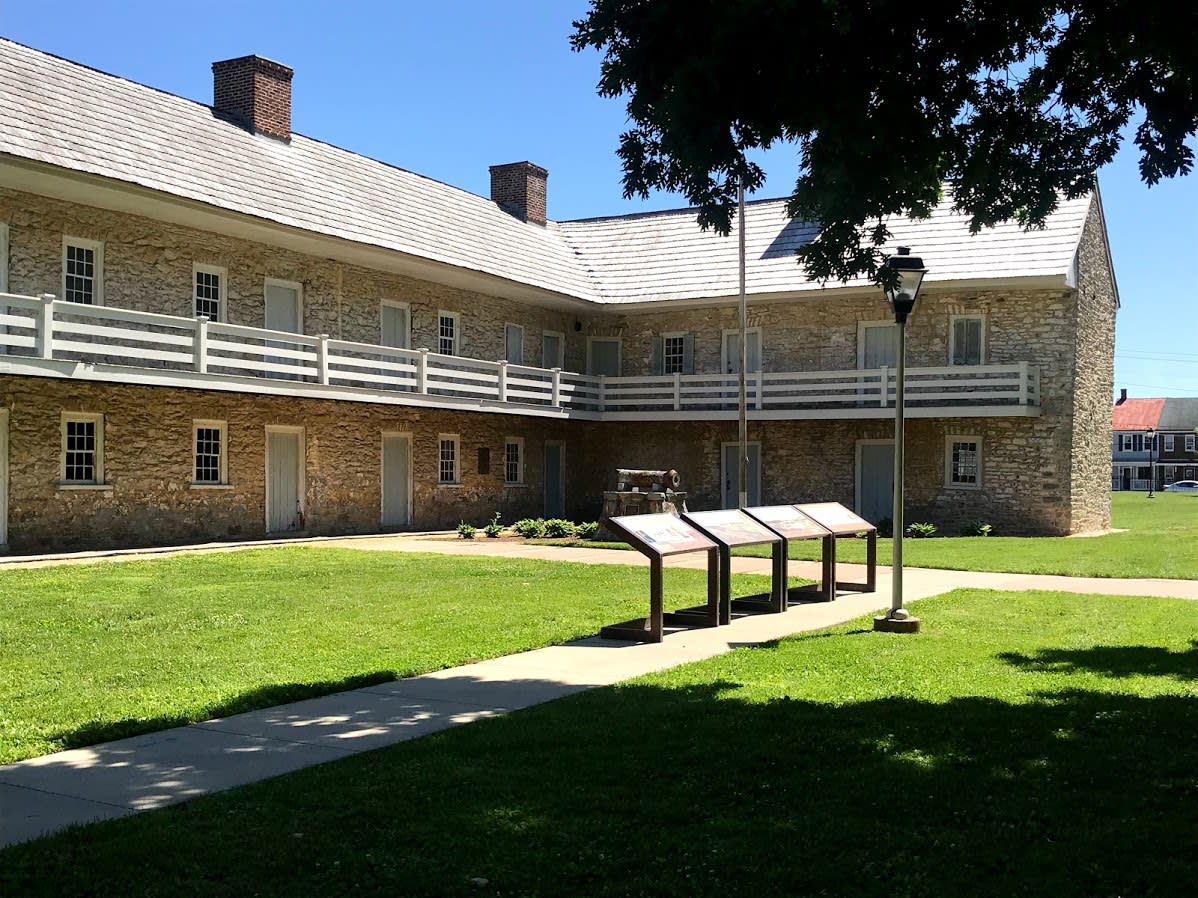 The Hessian Barracks today - this site was home to a Maryland arsenal dating back to the 1780s and served as a POW camp during the American Revolution, giving the building its name.
By the late 1800s, "Maryland Rye" was a name to reckon with - spoken about the way "Kentucky bourbon" is today, and prized alongside it. The Civil War helped: soldiers passing through Maryland on their way to battlefields at Gettysburg and Antietam got a taste of the local rye and carried that preference home when the fighting ended.
Frederick County led all of Maryland in rye production in 1860, more than 94,000 bushels in a single year on the eve of the Civil War.
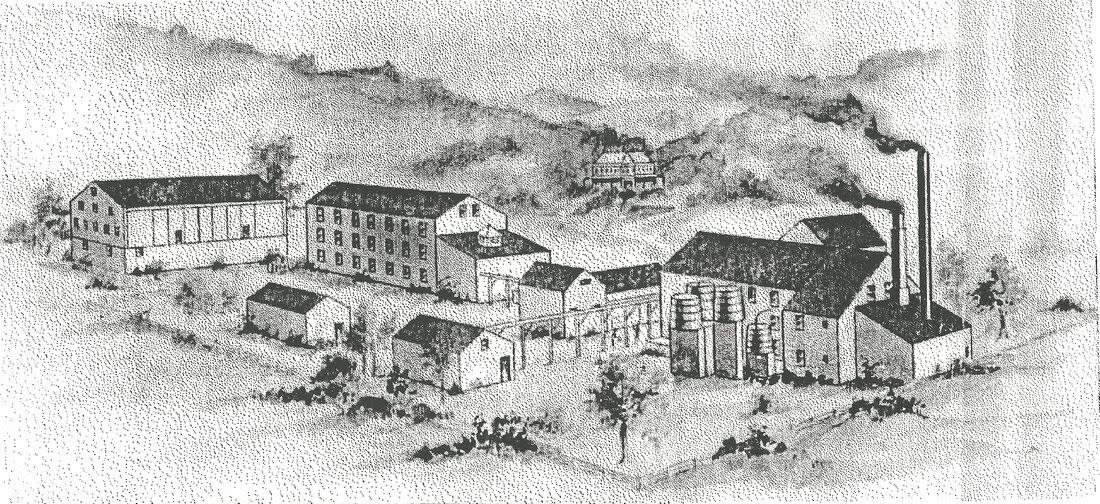 An illustration of the Horsey distillery near Burkittsville, MD (South Mountain Heritage Society)
The Whiskey That Went to Sea
If one story captures Frederick County's golden age of rye, it's the Horsey distillery near the village of Burkittsville, at the base of South Mountain. The Horsey family built it on the Needwood estate around the mid-19th century, using clean water off the mountain looming above the distillery. In September 1862, on the eve of the nearby battles at South Mountain and Antietam, the distillery was reportedly burned and its whiskey requisitioned by thirsty Confederate soldiers.
But the Horseys rebuilt and on a grand scale.
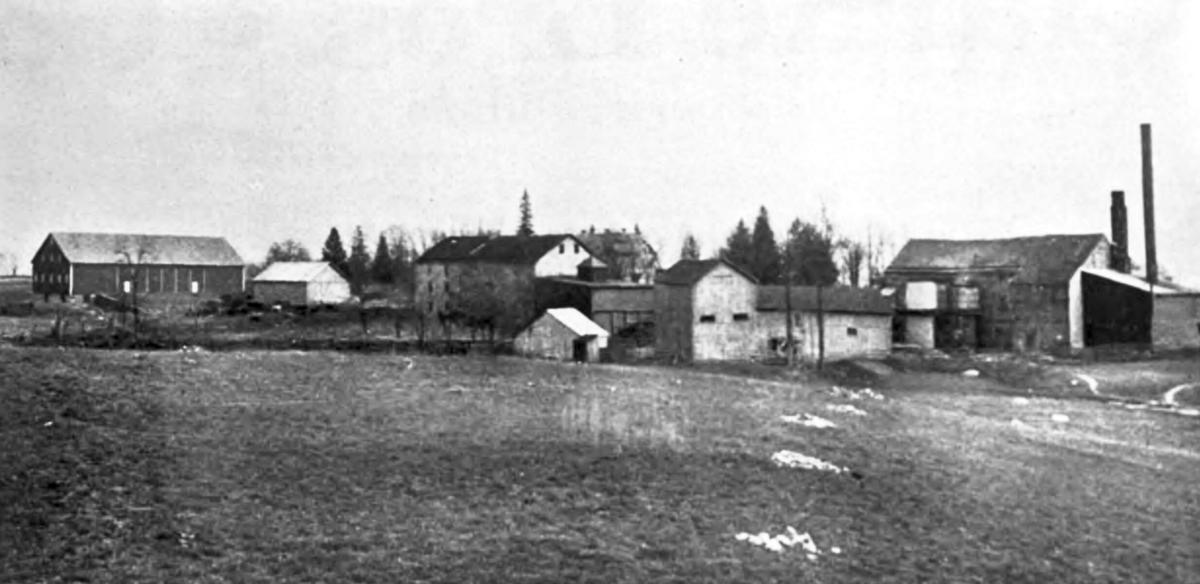 Horsey Distillery as it appeared in 1904 (South Mountain Heritage Society)
"Old Horsey" rye became one of the most theatrically marketed spirits in America. The signature move: after aging in barrels, the rye was shipped around South America to San Francisco, then much of it was hauled back to Maryland to finish. Each crate promised the whiskey had been "shipped by sea to San Francisco… thus acquiring a unique and most agreeable softness." Some of the whiskey remained in San Francisco and was marketed and sold as “Golden Gate Rye.”
Salt air or salesmanship, it worked.
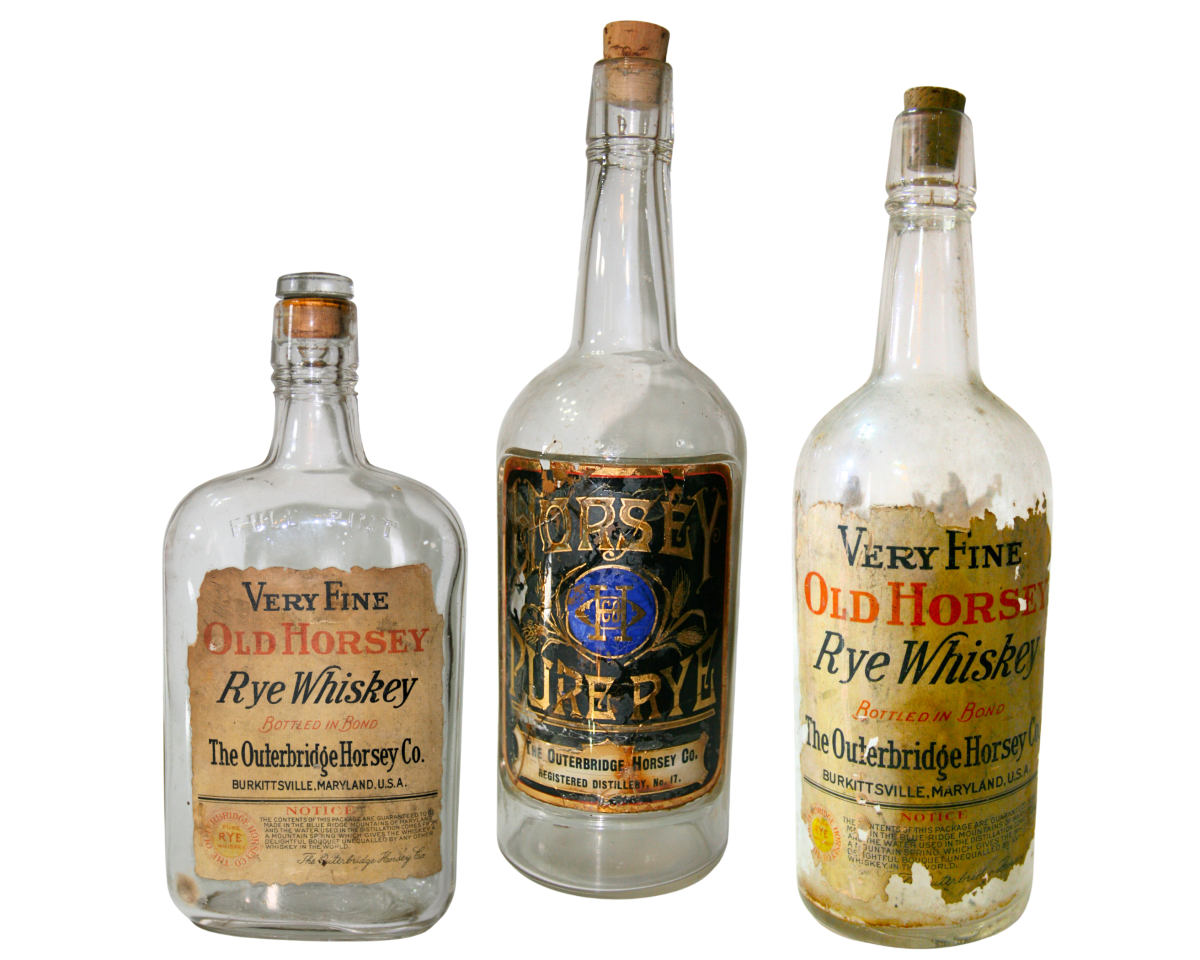 Bottles of Horsey rye whiskey (South Mountain Heritage Society)
Burkittsville's other distillery, run by the Ahalt family, did the same - its Antietam Rye sailing to Rio de Janeiro and back. Both closed when Prohibition arrived.
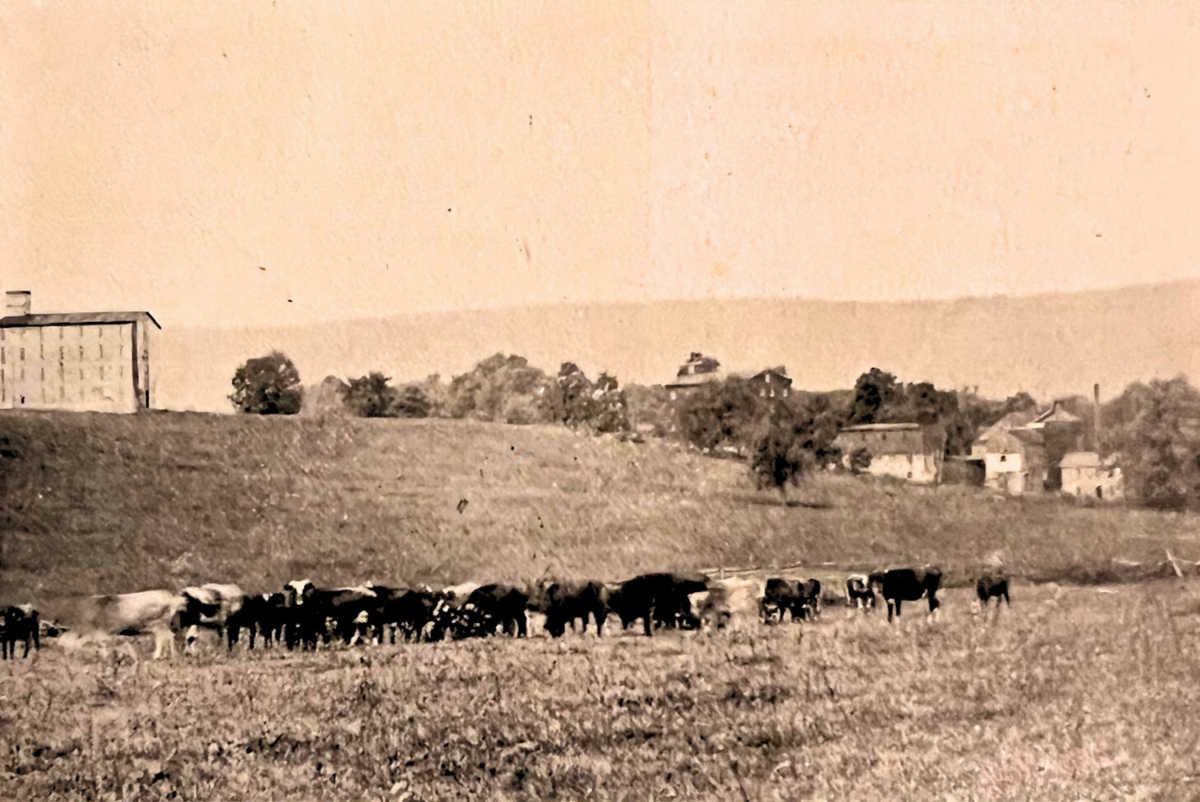 Site of the Ahalt Distillery near Burkittsville, MD (South Mountain Heritage Society)
Where to learn more: South Mountain Heritage Society, 3 East Main Street, Burkittsville, MD 21718. Open the first Saturday of the month, April–September, 10am-3pm
Prohibition and the Long Silence
The end came hard. Frederick County actually got there before the nation did - residents voted to go dry in November 1916. Local prohibition on the sales of alcohol went into effect on May 1, 1918, shuttering one of the county's largest industries two years before National Prohibition made it official.
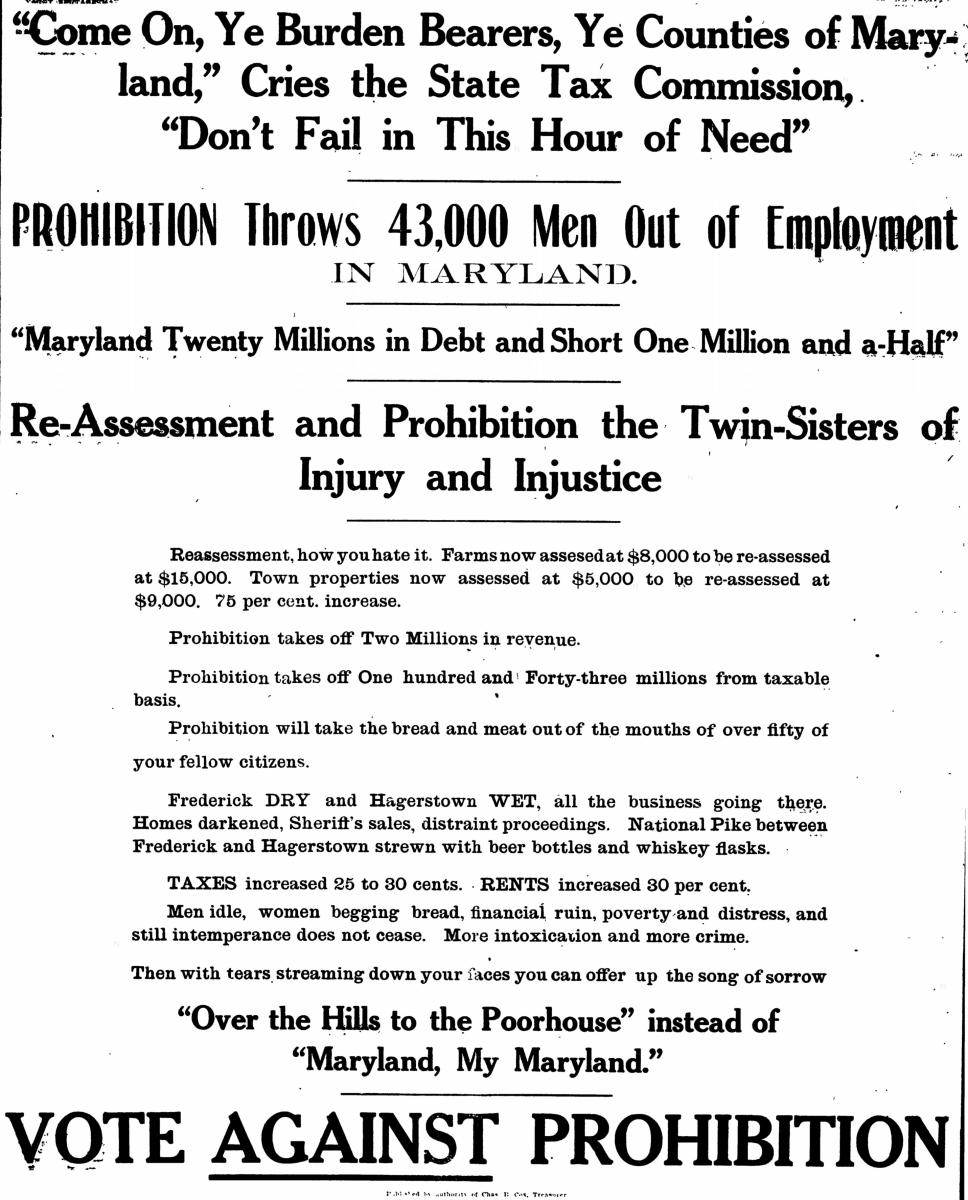 An anti-Prohibition newspaper advertisement from the Frederick News before the vote in November 1916
Maryland as a whole didn't go quietly, ratifying the 18th Amendment but refusing to pass any state law to enforce it. This streak of defiance earned the state its enduring nickname, "the Free State." It wasn't enough to save its namesake whiskey and in 1972, rye distilling had left Maryland entirely. For a generation, "Maryland rye" was something you read on dusty labels, not something you could pour.
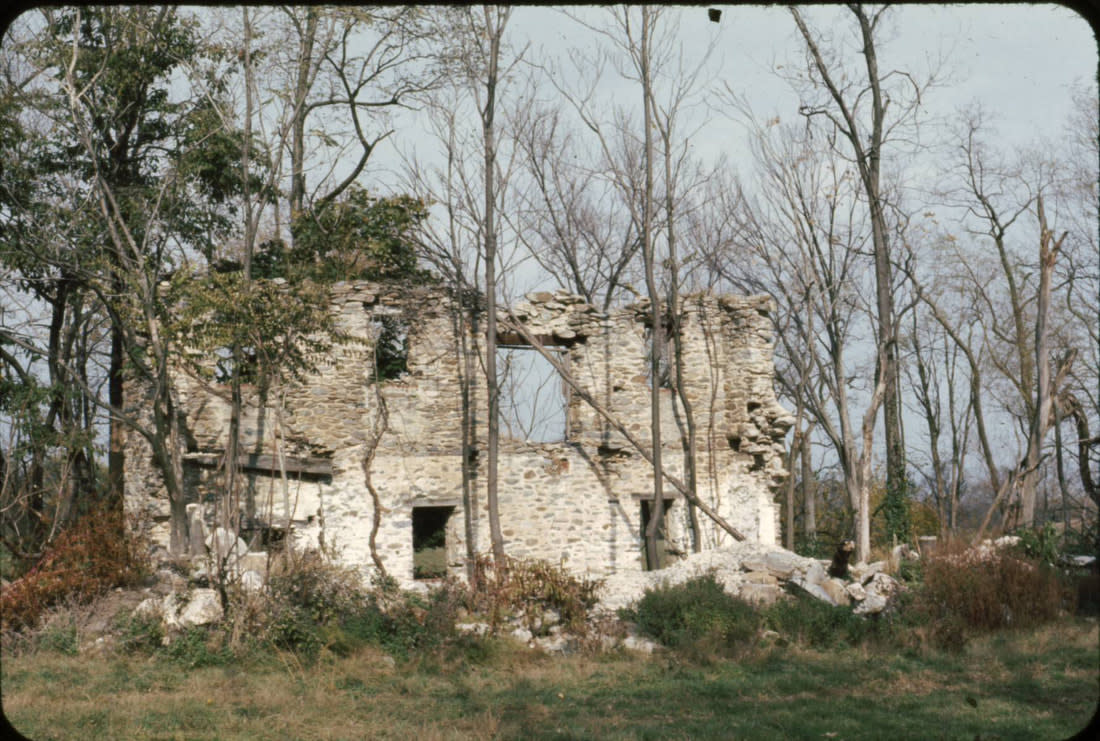
Ruins of the Horsey Distillery in the 1970s
The Revival: Frederick County Brings Rye Home
Beginning in 2016, distilling came roaring back to Frederick County, with several distilleries setting out not just to make good whiskey, but to reclaim Maryland's lost rye tradition.
McClintock Distilling
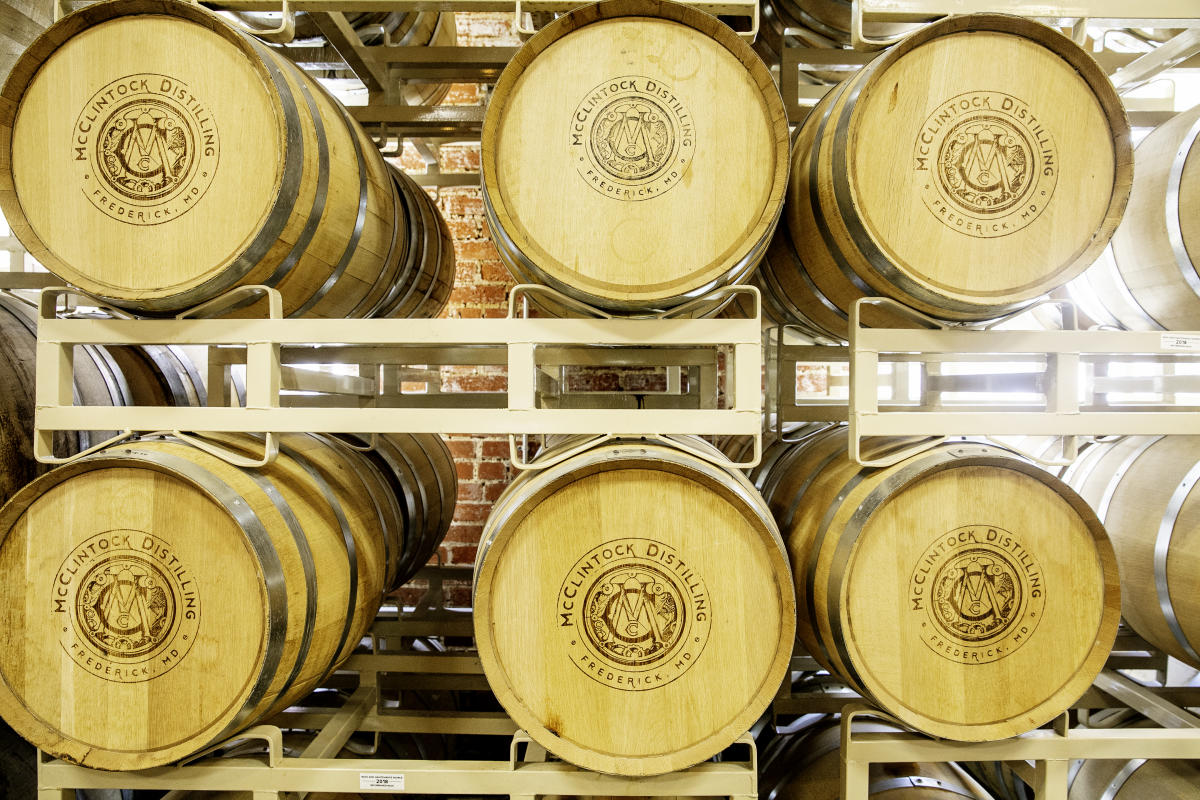
One of the clearest examples of Frederick County reaching into its own past can be found at McClintock Distilling in Downtown Frederick. Co-founder Braeden Bumpers worked with the South Mountain Heritage Society to identify the heirloom grain behind old Maryland ryes - a varietal called Danko rye, prized for the fruit-forward character that defined the regional style. McClintock now sources certified organic Danko rye from local farms and stone-grinds it on-site. Try the signature Bootjack Rye in an Ideal Old Fashioned at the speakeasy-style Back Bar next door to the distillery.
Tenth Ward Distilling Company
Founded in 2016 by Monica Pearce and named for the historic Frederick ward in the City of Frederick, woman-owned Tenth Ward makes its rye from 100% malted rye grown at a local farm that has cultivated the same early-1900s Maryland strain for three generations. Pearce has also championed the industry, testifying in support of making rye the official state spirit, which was achieved in 2023. Tenth Ward’s tasting room - the Cocktail Lab - in Downtown Frederick pours expertly made drinks. It’s not rye whiskey, but don't miss the distinctive Absinthe Nouvelle.
Springfield Manor Winery, Distillery, & Brewery
Maryland's only craft beverage trifecta - wine, beer, and spirits all made at one stunning historic estate near Thurmont, at the base of Catoctin Mountain. Springfield Manor is among the distilleries helping usher in the Maryland rye revival. The countryside views are worth the drive on their own, and the Lavender Gin is a delightful detour.
Dragon Distillery
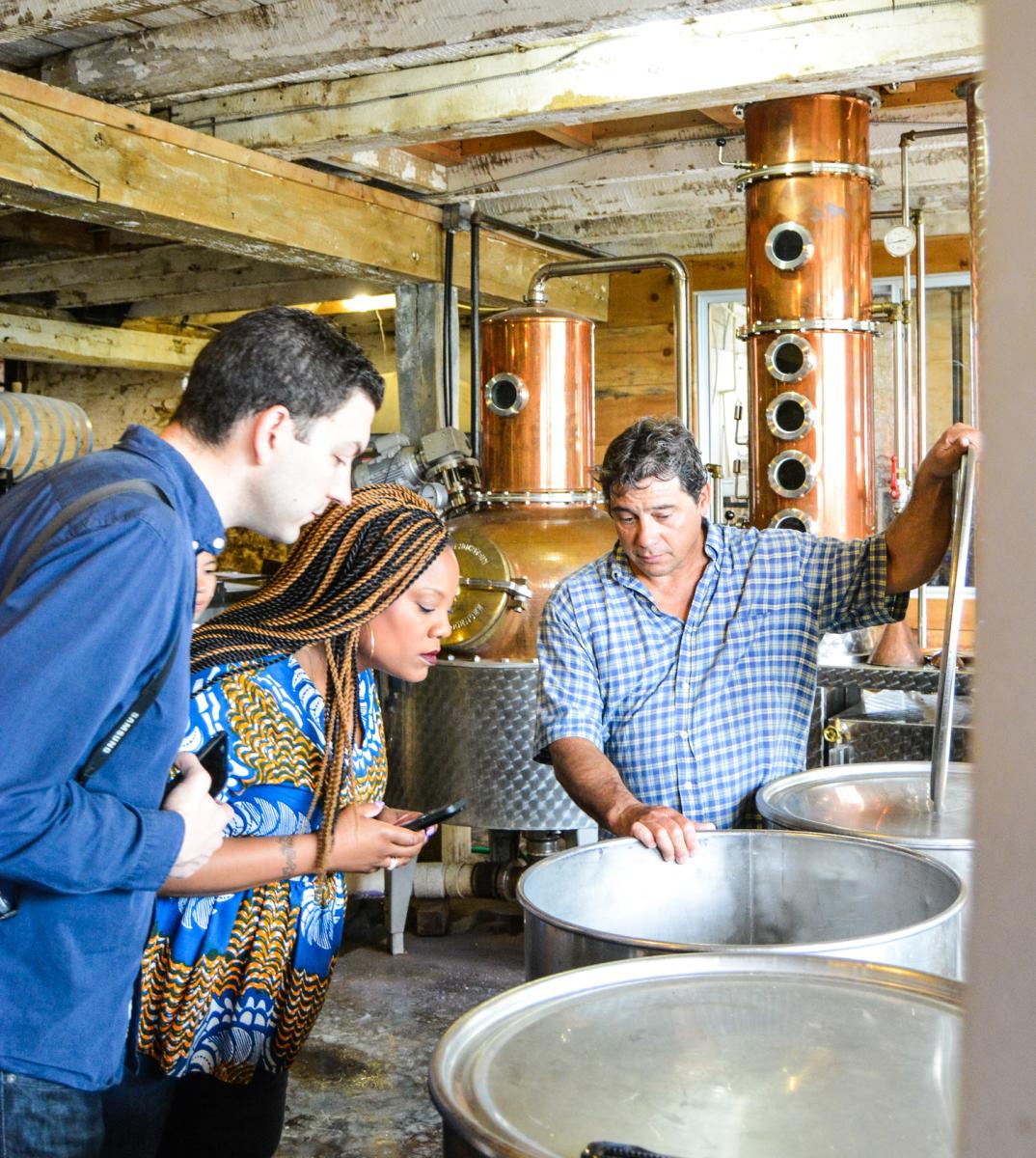
The first of the new wave (2016), Dragon Distillery leans all the way into a Dungeons & Dragons theme. Rye fans should reach for the Snallygaster Blended Whiskey - named for the dragon-like monster of South Mountain legend, the same mountain that sheltered the Horsey and Ahalt distilleries a century ago.
Plan Your Maryland Rye Experience in Frederick County
So much of the revival sits close together. In Downtown Frederick you can walk from Tenth Ward's Cocktail Lab to McClintock's Back Bar in a few blocks, then add a short drive to Dragon or up to Springfield Manor for a full day of sipping through our region's past. History buffs should make the pilgrimage to Burkittsville, where the Horsey rye once aged at the foot of South Mountain and explore the museum at the South Mountain Heritage Society.
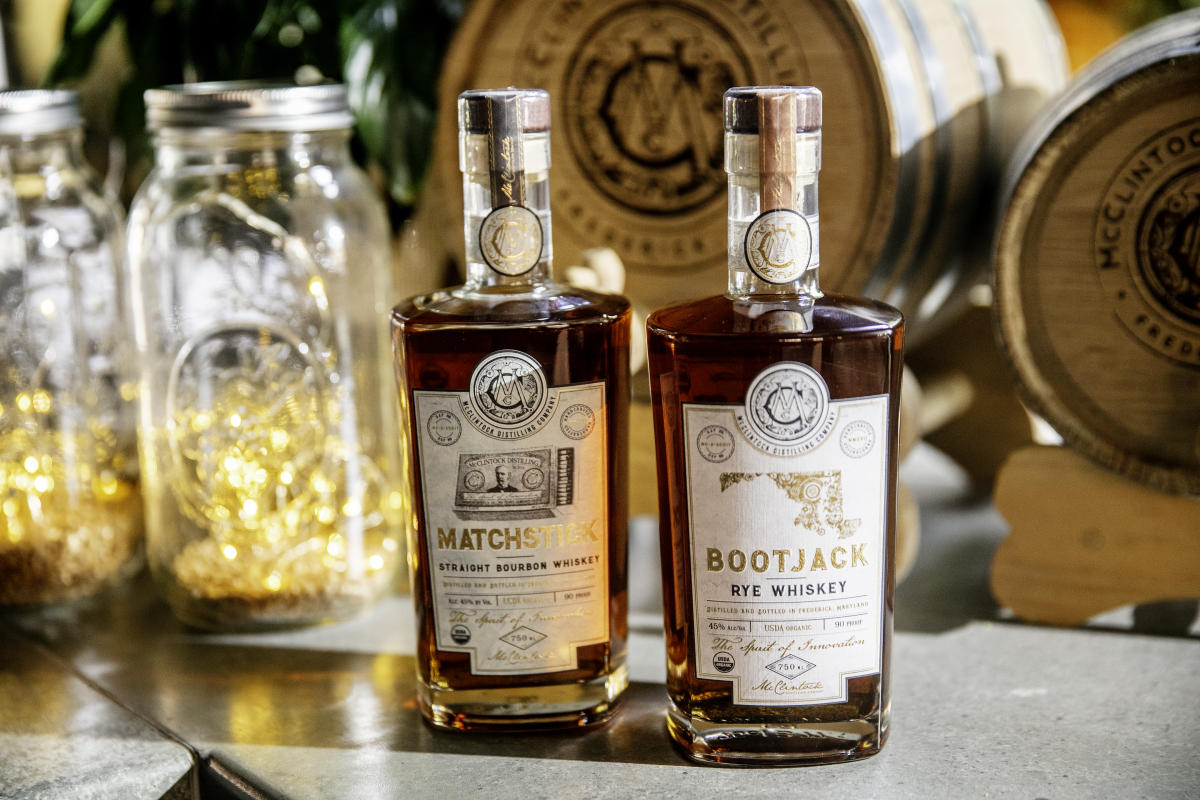
More than a century ago, Frederick County helped make rye Maryland's calling card. The distillers were silenced for the better part of a hundred years - but the legacy was remembered, the recipes survived, and the spirit is once again being made in the shadow of the same mountains. Come raise a glass to Maryland rye.
Explore more Frederick County stories
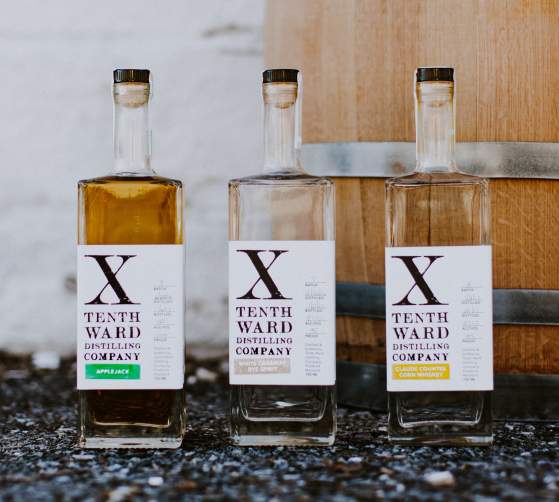
Distilling It Down: Distilleries in Frederick County, MD
A growing number of micro-distilleries make their unique spirits right here in Frederick County, MD. Take a journey…
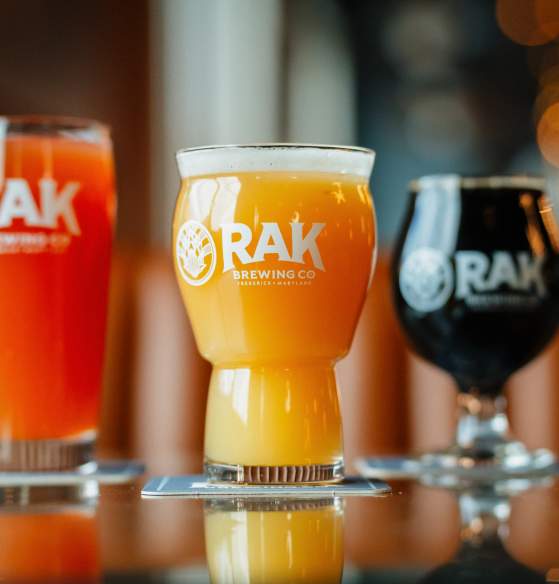
Brews and Beyond - A Guide to Frederick's Vibrant Carroll Creek Brewing District
Experience the energy in Downtown Frederick on a beer crawl through the Carroll Creek Brewing District! Located at…
Experiencing History in Frederick - The Road to the Battle of Antietam
Few places in Maryland have as much important Civil War history as Frederick County. Just like today, important…